
products
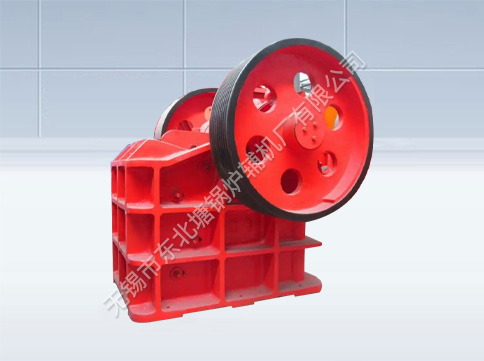
Jaw crusher, also known as e-type crusher, referred to as jaw crusher, is mainly used for medium-grain crushing of various ores and large pieces of materials. It is widely used in industries such as mining, smelting, building materials, highways, railways, water conservancy, and chemical industry. The maximum compressive strength of the crushed materials is 320MPa. Its performance characteristics include large crushing ratio, uniform product particle size, simple structure, reliable performance, easy maintenance, and low operating costs.
Basic Introduction
This series of jaw crushers (jaw crushers) features a large crushing ratio, uniform product particle size, simple structure, reliable operation, easy maintenance, and economical operating costs. Jaw crushers are widely used in industries such as mining, building materials, chemical industry, and metallurgy. They can perform coarse and medium crushing operations on various ores, rocks, and other materials with a compressive strength not exceeding 320MPa. They are equipment for crushing ore materials such as ore crushers and gangue crushers.
Jaw crushers are mainly used as primary crushers and secondary crushers in sectors such as mining, building materials, and infrastructure. They are divided into three types: large, medium, and small, based on the width of the feed opening. Machines with a feed opening width greater than 600MM are classified as large, those with a feed opening width between 300-600MM are medium-sized, and those with a feed opening width less than 300MM are small. Jaw crushers have a simple structure, are easy to manufacture, operate reliably, and are convenient to use and maintain.
The working parts of a jaw crusher are two jaw plates. One is a fixed jaw plate (fixed jaw), which is vertically (or with its upper end slightly tilted outward) fixed on the front wall of the machine body. The other is a movable jaw plate (movable jaw), which is inclined in position and forms a crushing cavity (working cavity) that is larger at the top and smaller at the bottom with the fixed jaw plate. The movable jaw plate makes periodic reciprocating movements towards the fixed jaw plate, sometimes separating and sometimes approaching. When they separate, materials enter the crushing cavity, and the finished products are discharged from the lower part; when they approach, the materials placed between the two jaw plates are crushed by the actions of extrusion, bending, and splitting.
Technical Parameters
| Model Specifications | Feed inlet size( ㎜ ) | Large feed particles( ㎜ ) | Adjustment range of discharge opening( ㎜ ) | Processing capacity(m/h) | motor(Kw) | weight(t) |
| PE-250×400 | 250×400 | 210 | 20-60 | 3-13 | 15 | 2.8 |
| PE-400×600 | 400×600 | 340 | 40-100 | 10-35 | 30 | 6.5 |
| PE-500×750 | 500×750 | 425 | 50-100 | 25-60 | 55 | 10.6 |
| PE-600×900 | 600×900 | 500 | 65-180 | 30-85 | 55-75 | 15.5 |
| PE-750×1060 | 750×1060 | 630 | 80-180 | 72-150 | 90-110 | 28 |
| PE-800×1060 | 800×1060 | 680 | 100-200 | 85-143 | 90-110 | 30 |
| PE-870×1060 | 870×1060 | 750 | 170-270 | 145-235 | 90-110 | 30.5 |
| PE-900×1060 | 900×1060 | 780 | 200-290 | 170-250 | 90-110 | 31 |
| PE-900×1200 | 900×1200 | 780 | 95-255 | 100-240 | 110-132 | 49 |
