
products
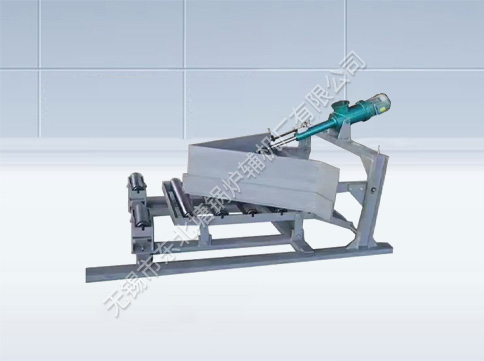
The plow discharger is a kind of unloading and coal distributing machinery, which has the advantages of self-locking, no internal or external leakage, large overload capacity, and stable operation.
Classification of Plow Unloaders
(1) Classified by the unloading position of the equipment: single-sided and double-sided;
(2) Equipment installation forms: left installation and right installation;
(3) Push rod installation forms: side push rods and upper push rods;
(4) According to the power form: electric, pneumatic, and electro-hydraulic push rods;
Structural characteristics of the plow discharger
The plow-type unloader further overcomes the shortcomings of all old-fashioned unloaders. Due to the improvement of the front and rear double plowshares, the locking device, and three different installation structures: manual-electric dual-purpose and mechanical self-locking, it is currently a coal unloading and distributing machinery in China.
1. The plowshare part is divided into a front plowshare made of front alloy high chromium manganese or asbestos material and a rear plowshare made of wear-resistant rubber plate, which makes unloading cleaner.
2. The locking device added to the plow head is a mechanical grabbing and pulling type, which can adjust the height of the plow blade. During operation, the plow blade will not lift or shake due to the impact force of coal, thus avoiding the phenomena of belt tearing, wear and coal leakage.
3. The driving part is currently a domestic manual-electric dual-purpose mechanical electro-hydraulic push rod. It overcomes the defects of electric push rods such as poor overload capacity, easy motor burnout, jamming, and bending of the lead screw, as well as new drawbacks of ordinary electro-hydraulic push rods like internal and external leakage, inability to self-lock, sliding, and crawling. The manual-electric dual-purpose mechanical electro-hydraulic push rod, however, has advantages such as self-locking, no internal or external leakage, strong overload capacity, and stable operation.
4. The installation methods are divided into three types: A, B, and C. The electro-hydraulic push rod can be installed in three optional ways: on the upper part of the coal separator, vertically installed, or installed on both sides of the belt, which greatly facilitates customers.
5. The air lock flap is made of high manganese-chromium wear-resistant material, which extends the service life to 20 years and reduces maintenance work.
6. Use of the air-lock part: (1) To make the materials evenly distributed, prevent deviation, sticking, and scattering along the way. (2) To reduce induced air blowing, reducing it to less than 10% of the original. (3) Suitable for conveying sticky materials, wet materials, bulk materials, and powdery materials to prevent sticking and blocking.
Working Principle of Electric Variable Slot Angle Plow Discharger
The electro-hydraulic plow discharger uses an electric hydraulic push rod as its power source. During operation, the push rod extends to act on the drive rod, driving the frame forward, causing the plow blade to lower, and supporting the flat idler group, which makes the working surface of the belt flat. The lower edge of the plow blade fits tightly with the belt surface, unloading the materials on the running belt into the hopper or to the required place. When the unloading is completed, the push rod is started to retract, acting on the drive rod and driving the frame to retreat, lifting the plow blade. The variable groove angle idler group changes from flat to grooved, restoring the working surface of the belt to the grooved state, allowing materials to pass smoothly. Since the electric hydraulic push rod adopts hydraulic transmission, it has automatic overload protection performance. When the operation is blocked, the pressure in the oil circuit increases to the set limit, and the overflow device overflows quickly and accurately to implement overload protection. The motor operates within the rated value and will not burn out.
The specific model is selected according to the width of the conveyor belt!
